
Global Warming and Reforestation: Why Forest Restoration Matters for Climate Action
Global temperatures continue to rise as forests remain under pressure. Explore how protecting and restoring forests can support climate action, biodiversity and resilience—especially in Pakistan.
By Jay Jarwar
7/18/20266 min read
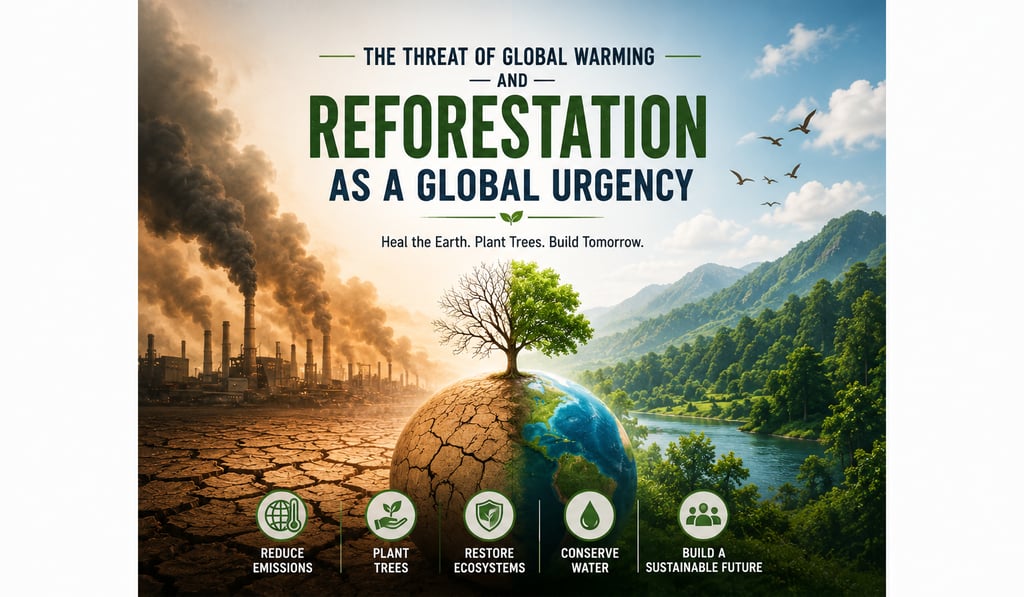
Beyond the Heat: Why Forest Protection and Restoration Matter for Climate Action
The world is warming at an unprecedented pace. From record-breaking heatwaves and devastating floods to prolonged droughts and destructive wildfires, the effects of climate change are becoming increasingly visible across every continent. Scientists, governments, and environmental organizations continue to warn that without decisive action, the environmental, economic, and humanitarian consequences could become even more severe in the coming decades.
The latest evidence shows how quickly the climate is changing. According to the World Meteorological Organization, 2025 was the second or third warmest year on record, with global average temperature about 1.43°C above the 1850–1900 average. The eleven years from 2015 to 2025 were the eleven warmest years ever recorded.
While reducing greenhouse gas emissions remains essential, another powerful solution is often overlooked: reforestation. Protecting existing forests and restoring degraded ecosystems are important nature-based climate solutions. They can remove carbon dioxide from the atmosphere while also supporting biodiversity, water management, and local livelihoods. However, forest restoration must complement—not replace—rapid reductions in fossil-fuel emissions.
The fight against global warming is not solely about preventing environmental degradation—it is about safeguarding the future of humanity.
Understanding Global Warming
Human activities have increased greenhouse-gas concentrations, with the largest contribution coming from the burning of fossil fuels. Important additional sources include industrial processes, agriculture, and land-use change, including deforestation.
These activities strengthen the greenhouse effect, trapping more heat within the atmosphere and disrupting natural climate systems.
The Growing Consequences
Climate change is no longer a distant concern. Its impacts are affecting millions of people worldwide.
More Frequent Heatwaves
Many regions are experiencing hotter summers, increasing health risks, reducing agricultural productivity and placing greater pressure on electricity systems.
Related Reading: Pakistan's Rising Heat: Are We Prepared for a Hotter Future?
Extreme Weather Events
Climate change is increasing the frequency and intensity of many heat extremes and heavy-rainfall events, while also influencing drought, wildfire and tropical-cyclone risks in ways that vary by region.
Rising Sea Levels
Melting glaciers and expanding oceans threaten coastal cities, island nations and low-lying communities.
Food and Water Insecurity
Changing rainfall patterns and extreme temperatures are reducing crop yields in several regions while increasing pressure on freshwater resources.
Biodiversity Loss
Many plant and animal species struggle to adapt to rapidly changing environments, increasing the risk of extinction.
Why Forests Matter
Forests are among the world's most important terrestrial ecosystems and carbon stores. According to the FAO's Global Forest Resources Assessment 2025, forests cover about 4.14 billion hectares—roughly one-third of the world's land area.
Although global deforestation has slowed, the FAO estimates that about 10.9 million hectares of forest were still being deforested each year during 2015–2025. Net forest loss averaged about 4.12 million hectares annually over the same period.
Healthy forests:
Absorb carbon dioxide from the atmosphere.
Regulate rainfall patterns.
Reduce soil erosion.
Protect rivers and watersheds.
Moderate local temperatures.
Provide habitat for countless species.
Support millions of livelihoods worldwide.
When forests disappear, these vital environmental services are weakened, accelerating climate change and ecosystem degradation.
Reforestation Is Important—but Protecting Existing Forests Comes First
Reforestation can remove carbon dioxide from the atmosphere and restore damaged ecosystems, but planting new trees should not distract from protecting forests that already exist. Mature natural forests contain established carbon stocks, biodiversity, and ecological systems that can take decades or centuries to rebuild after destruction.
The IPCC notes that reducing deforestation and forest degradation preserves existing carbon stocks and can protect biodiversity and ecosystem services more effectively and at lower cost than attempting to recreate them later through afforestation or reforestation.
Planting and protecting trees can deliver multiple long-term benefits.
Carbon Storage
Growing trees naturally absorb carbon dioxide, helping reduce greenhouse gas concentrations in the atmosphere.
Restoring Ecosystems
Reforestation rebuilds habitats for wildlife, strengthens biodiversity and supports healthier ecosystems.
Water Conservation
Healthy forests and restored watersheds can reduce erosion, improve soil structure, and help regulate water flows. However, their effects on groundwater and water availability vary by ecosystem, climate, and the species planted.
Healthier Agriculture
Trees reduce soil erosion, improve soil fertility, and create more resilient farming landscapes.
Cleaner Air
Urban and rural forests help remove pollutants while improving air quality.
Planting Trees Is Not Enough
Successful restoration is not simply a matter of counting how many saplings are planted. The long-term outcome depends on whether trees survive, whether appropriate species are used, whether local ecosystems are protected and whether communities have incentives to maintain restored landscapes.
Poorly planned afforestation can create unintended problems. Large monoculture plantations or inappropriate species can reduce biodiversity, compete with agriculture, and, in some environments, place additional pressure on water resources.
The goal should therefore be ecological restoration rather than tree numbers alone: protecting natural forests where possible, encouraging natural regeneration, restoring native vegetation, and planting trees where they are environmentally appropriate.
Pakistan's Challenge and Opportunity
Pakistan is among the countries considered highly vulnerable to climate change.
The country has experienced:
Severe floods.
Heatwaves.
Water stress.
Glacial melting.
Desertification in some regions.
At the same time, Pakistan possesses significant potential for landscape restoration.
Large-scale tree plantation initiatives, community forestry, watershed management, and protection of existing forests can strengthen climate resilience while creating employment opportunities and improving rural livelihoods.
However, successful reforestation requires more than planting millions of saplings. Long-term success depends on protecting young trees, preventing illegal logging, selecting native species, and involving local communities in forest management.
Pakistan's latest Nationally Determined Contribution, NDC 3.0, identifies forestry, biodiversity and watershed restoration as important parts of the country's climate strategy. It calls for expanding forest cover, continuing the Upscaled Green Pakistan Programme, strengthening forest monitoring, conserving mangroves and rehabilitating watersheds.
The stakes extend well beyond forests. The World Bank has estimated that the combined effects of climate change and environmental degradation could reduce Pakistan's annual GDP by 18–20% by 2050 without adequate action, reinforcing the case for both climate adaptation and ecosystem restoration.
Beyond Governments: Everyone Has a Role
Governments play a central role through environmental policies and investment, but climate action cannot depend solely on public institutions.
Businesses can:
Reduce emissions.
Invest in sustainable supply chains.
Support conservation initiatives.
Educational institutions can raise environmental awareness among future generations.
Communities can protect local ecosystems and participate in tree-planting campaigns.
Individuals can contribute by:
Planting native trees.
Conserving energy.
Reducing waste.
Recycling responsibly.
Using public transport where possible.
Supporting environmentally responsible products.
Individual action matters most when it is reinforced by effective public policy, cleaner energy systems, sustainable land management, and responsible business practices.
Technology and Nature: Working Together
Technology will continue to play an important role in addressing climate change through renewable energy, electric vehicles, energy-efficient buildings and improved environmental monitoring.
Yet technology alone cannot replace healthy ecosystems. The reverse is also true: nature-based solutions cannot replace the rapid decarbonisation of electricity, transport, buildings, and industry. An effective climate strategy requires both emissions reduction and ecosystem protection.
A balanced strategy combines innovation with nature-based solutions, ensuring that economic development and environmental protection advance together rather than competing against each other.
Related Reading: Artificial Intelligence and the Environment: Is AI Solving Climate Change or Making It Worse?
Key Takeaways
2025 was one of the three warmest years ever recorded, at about 1.43°C above the pre-industrial average.
Forests cover about 4.14 billion hectares worldwide, but around 10.9 million hectares were still being deforested annually during 2015–2025.
Protecting existing natural forests is as important as—and often more immediate than—planting new trees.
Well-designed reforestation can store carbon, restore biodiversity and strengthen climate resilience, but poorly planned plantations can create ecological trade-offs.
Reforestation cannot replace reductions in fossil-fuel emissions; effective climate action requires both decarbonisation and ecosystem protection.
Frequently Asked Questions
What is global warming?
Global warming refers to the long-term rise in Earth's average temperature caused mainly by increased greenhouse gas emissions from human activities.
Why is reforestation important?
Reforestation absorbs carbon dioxide, restores ecosystems, improves biodiversity, conserves water resources and helps reduce the impacts of climate change.
Can planting trees alone stop climate change?
No. Reforestation is an important solution, but it must be combined with emission reductions, renewable energy, sustainable agriculture and stronger environmental policies.
Why is Pakistan vulnerable to climate change?
Pakistan faces risks from floods, heatwaves, water scarcity, glacial melting and changing weather patterns, making climate adaptation an important national priority.
Is protecting existing forests better than planting new trees?
Both are important, but preventing the loss of healthy existing forests should generally be prioritised. Established forests already store large amounts of carbon and support mature ecosystems and biodiversity that can take decades or longer to recreate. Reforestation is most valuable where forests have already been degraded or lost.
Final Perspective: Forests Are Part of the Climate Solution—not a Substitute for Cutting Emissions
The world's forests are powerful allies in addressing climate change. Protecting existing forests prevents stored carbon from being released, while restoring degraded landscapes can remove additional carbon from the atmosphere and strengthen biodiversity, water security and livelihoods.
But tree planting is not a shortcut around the central challenge of climate change. The world must still reduce emissions from fossil fuels, industry, transport and other major sources as rapidly as possible.
The strongest strategy therefore combines two objectives: decarbonising the global economy while protecting and restoring the natural systems that already absorb and store carbon.
For Pakistan, this means moving beyond plantation campaigns toward long-term forest protection, native ecosystem restoration, mangrove conservation, watershed management and transparent monitoring.
The question is not whether humanity should choose technology or nature. A durable climate response will require both.
About the Author
Jay Jarwar is the founder and editor of JayJarwar Insights. He writes about artificial intelligence, technology, geopolitics, economics, public policy and emerging global trends, with a focus on explaining complex issues in clear and accessible language.
JayJarwar Insights
Ideas • Analysis • Perspectives
© 2026 JayJarwar Insights. All Rights Reserved.